The Best Time to Travel to Antarctica for Your Expedition
When is the best time to travel to Antarctica ? The short answer is during the Southern Hemisphere's summer, a tight five month window from November to March .
This is the only time the continent unlocks. It’s when the sea ice retreats just enough for ships to get through, the temperatures climb to something manageable, and the long days give us the light we need to operate. But the best time for you within that window? That comes down to what you want to achieve.
Understanding the Antarctic Expedition Season
Planning an expedition to Antarctica starts with its biggest constraint: the calendar. You cannot simply go whenever you feel like it. The continent dictates the terms, and its brief, intense summer is the only time it welcomes visitors.
This is not about preference; it is about the raw, physical reality of the place. Three critical factors govern this short season:
- Sea Ice: In winter, the ocean around Antarctica freezes solid, effectively doubling the continent's size. Come summer, this vast expanse of pack ice begins to break up, clearing vital gateways like the Drake Passage and allowing ships to even get close to the peninsula.
- Temperatures: "Mild" here is a very relative term. Whilst the interior remains unimaginably cold (think below -30°C ), the coastal areas of the peninsula where most of us operate hover between -2°C and 5°C . It’s still cold, but it makes Zodiac landings and shore excursions possible.
- Daylight: Near the peak of summer in December and January, you can experience nearly 24 hours of daylight . This is not just a novelty; it is essential for safe navigation and gives us maximum time on the ground for wildlife observation or on the ice for ski crossings.
As you can see, the season has its own rhythm. It starts with a focus on pristine, dramatic ice in November, moves into the peak of penguin and seal activity in December and January, and ends with significant whale encounters as the season winds down.
To help you visualise this, here’s a quick month by month breakdown of what to expect.
Antarctic Expedition Season Overview
| Period | Key Characteristics | Wildlife Activity | Ideal For |
|---|---|---|---|
| November | Early season. Pristine snow and ice. Colder temperatures. Fewer ships. | Penguins courting and building nests. Seals establishing territories. | Photographers, adventurers seeking a raw and untouched landscape. |
| Dec - Jan | Peak summer. Longest days, warmest temperatures. Most stable weather. More vessel traffic. | Penguin chicks hatching. Seal pups abundant. Peak of breeding season activity. | First time visitors, classic peninsula voyages, wildlife lovers. |
| Feb - March | Late summer. Receding ice opens new areas. Stunning sunsets. Cooler evenings return. | Whale sightings are at their peak. Fledgling penguin chicks learning to swim. | Whale watchers, explorers wanting to push further south. |
This table gives a bird's eye view, but the real story is in the nuance between the peak and the shoulders of the season.
Shoulder vs Peak Season
You can think of the five month window as having a core and two edges. The 'shoulder' months of November and March bookend the season. They are typically colder, with more dynamic ice and fewer other ships around. The feeling is one of raw, untamed wilderness. It is Antarctica at its most elemental.
In contrast, the 'peak' season of December and January is the heart of the austral summer. This is when you will find the most settled weather, the "warmest" days, and a continent teeming with life. The penguin colonies are a chaotic, noisy, incredible spectacle.
Deciding between these periods is the first real step in shaping your expedition. It is about matching your personal objectives to the continent’s unyielding rhythm. The logistics that follow are significant, and you can get a deeper sense of what is involved by reading our guide on how to get to the Antarctic.
Early Season: November to Early December
Step onto the ice in November, and you are meeting Antarctica as it wakes from its long, dark winter. This is the continent at its most raw and untamed.
You are greeted by a world of sharp contrasts. Vast plains of sea ice stretch to the horizon, broken only by freshly calved icebergs the size of office blocks. The low sun hangs in the sky, casting long, dramatic shadows across snow that no one has yet touched. There is a quietness, a profound sense of having the place almost entirely to yourself.
Of course, this stark beauty comes with its own set of rules. It is, without a doubt, the coldest stretch of the visitor season. You can expect temperatures on the peninsula to sit somewhere between -5°C and -10°C (23°F to 14°F). The weather is also far less settled. We build this into our plans, but it is a reality that demands respect and the right kit.
The Power of Sea Ice
The single biggest factor dictating any early season expedition is the sea ice. It is not just a feature of the landscape; it is an active, powerful force that decides where we can and cannot go.
Whilst the main shipping channels are typically open, thick pack ice often blocks the entrance to specific bays and landing sites. A planned stop at a well known spot like Port Lockroy (64°49′S 63°30′W) might be completely impossible, walled off by a kilometer wide barrier of solid ice.
This is not a failure or a change of plan. It is simply the nature of polar exploration. A skilled expedition leader does not try to fight the ice; they work with it, reading the conditions and finding new, often unexpected, opportunities.
It is exactly why an early-season trip demands a flexible mind. The objective is not to tick boxes on a fixed itinerary. It is to explore what Antarctica allows you to see each day. This mindset, making sound decisions in a fluid environment is a core competence we teach at the Pole to Pole Academy .
A Time of New Beginnings
From a wildlife point of view, November is all about courtship and preparation. The chaotic crèches of fluffy penguin chicks are still a few weeks away. Instead, you get a front row seat to the very foundations of the breeding cycle.
- Courting and Nest Building: You will see Adélie, Gentoo, and Chinstrap penguins returning to their colonies, engaging in elaborate rituals, and meticulously building their nests. A single, perfectly chosen pebble becomes the most valuable currency.
- Life on the Ice: Weddell and crabeater seals are easy to spot on the ice floes. They gave birth earlier in the spring, so their pups are still young and the adults remain close by.
- Pristine Colonies: The colonies are immaculate, free from the guano that will accumulate over the coming months. It is a chance to see penguin society at its most orderly before the delightful chaos of hatching begins.
For serious expeditioners, especially those with major continental objectives, this early start is a tactical must. Anyone attempting a Last Degree ski to the South Pole has to start in early November. It is the only way to build in enough time to cover the 111 kilometres (around 69 miles) before the weather window starts to close in late January.
This time of year is not for everyone. It suits the traveller who is ready for the cold and who values the immense, icy grandeur of the continent over the sheer volume of wildlife activity you find later on. It is the best time to visit Antarctica if you want to experience a world of ice and light just emerging from its deep winter sleep.
Peak Season Travel From Mid-December to January
If you close your eyes and picture Antarctica, you are probably imagining the peak season. Mid December through January is the heart of the austral summer, a time of seemingly endless daylight, explosive wildlife activity, and the most stable weather the continent offers all year. For most people, this is the classic Antarctic experience.
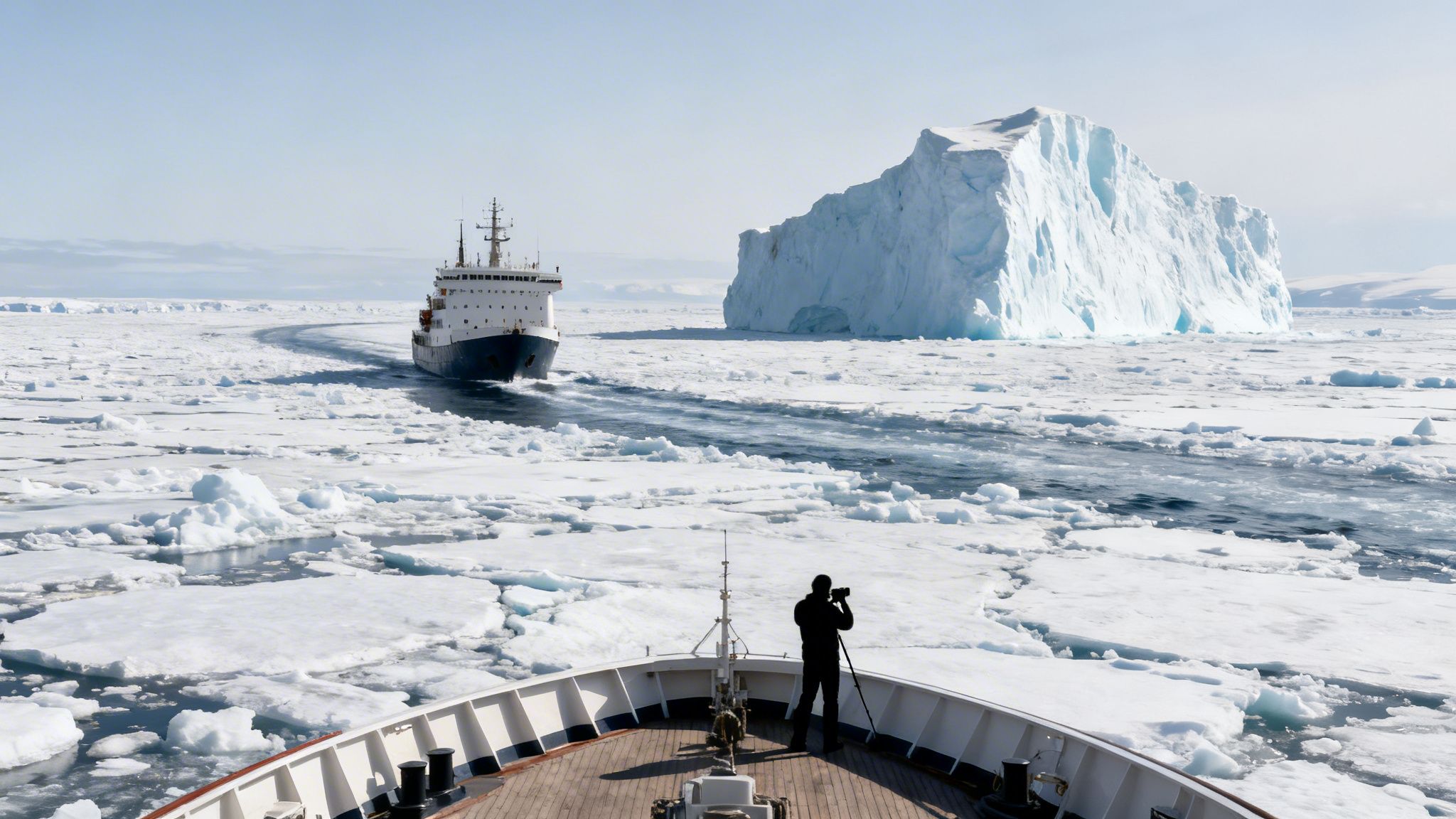
The biggest draw of this period is predictability, a rare luxury in the polar regions. Temperatures along the peninsula are at their warmest, generally sitting between -2°C and 5°C . Combined with almost 24 hour daylight , this creates the most settled conditions you will find.
This stability is not just about comfort; it is operationally critical. For our teams supporting major land based expeditions like a South Pole Ski , this window is non negotiable. Consistent weather means reliable flights into interior hubs like Union Glacier and gives skiers the best possible chance to put in the hard eight to ten hour days required.
Unparalleled Access and Wildlife Activity
By mid December, the winter sea ice has retreated dramatically, opening up huge swathes of the coastline that were locked tight only weeks before. This is our chance to push further south and attempt to cross the Antarctic Circle at 66° 33′ S – a real milestone for any polar traveler. Channels and bays that were choked with ice now invite deep exploration by Zodiac.
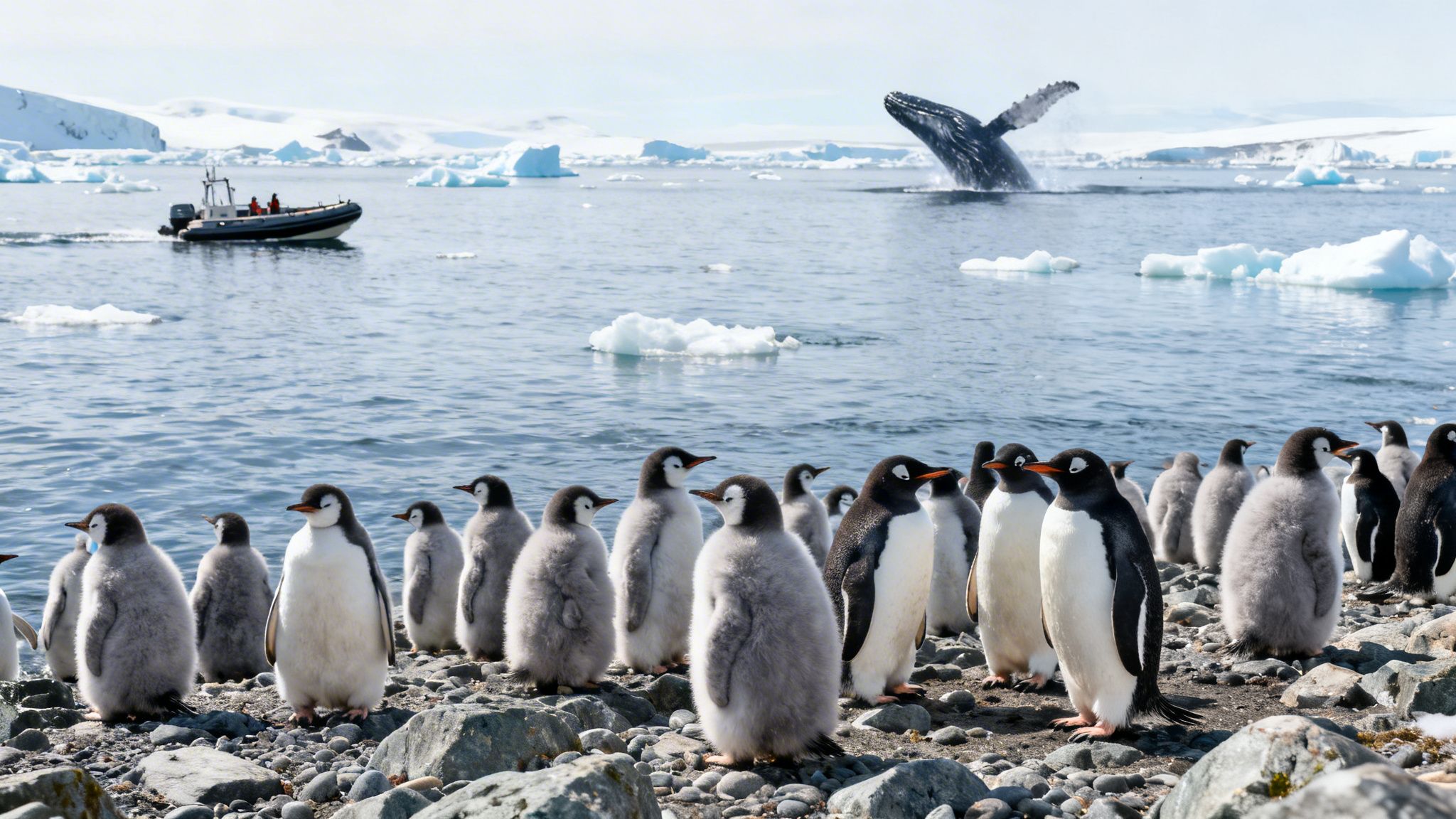
And the wildlife? It is simply spectacular. The breeding season is in full swing, and the entire continent feels alive.
- Penguin Colonies: The sound and energy of a penguin rookery are at their absolute peak. The first chicks have hatched, and you can watch the frantic, constant shuttle of adults heading out to sea to forage and returning to feed their hungry young.
- Seal Pups: On the beaches and ice floes, you will see Weddell, crabeater, and leopard seals with their pups. They are growing fast but still sticking close to their mothers.
- Whale Sightings: Humpback and minke whales have arrived in force. As they feast on the summer's rich krill blooms, sightings become much more frequent and linger for longer.
Considering the Trade Offs
Of course, the advantages of peak season are no secret, and they come with a couple of trade offs. This is the busiest and most expensive time to visit. The International Association of Antarctica Tour Operators (I AATO) anticipates over 107,270 travelers for the 2024-25 season, with most arriving during this narrow window. This means you will almost certainly see other ships and share landing sites.
For anyone on their first trip, or if your main objective is to see the full spectacle of Antarctic wildlife, this is often the best time to travel to Antarctica . The combination of accessibility, animal activity, and stable weather makes for a phenomenal introduction.
For the expeditioner, this season is about maximising opportunity. The long days and open waters allow for ambitious itineraries and provide a crucial buffer against the continent’s inherent unpredictability. It is the time when Antarctica is at its most generous.
However, more ships on the water also means the Drake Passage can feel busier. Navigating this infamous stretch of ocean is a core part of the journey, and it always demands respect. We get into the realities of the crossing in our guide to the Drake Passage waves. Because even in peak season, the Southern Ocean always has the final word.
Late Season Travel From February to March
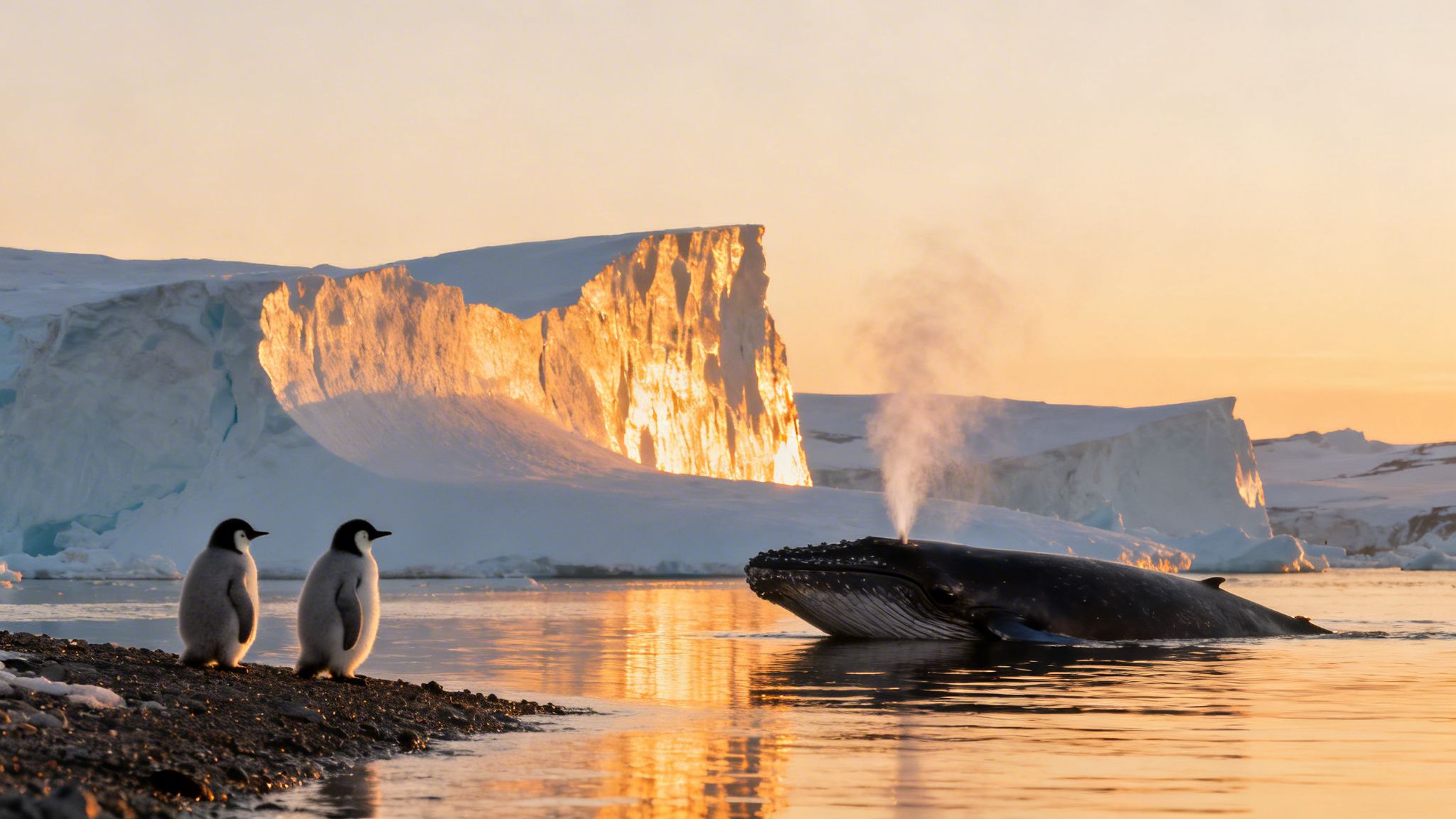
As the austral summer begins to fade, a profound shift settles over the Antarctic continent. The late season, from February into March, is a time of transition. The relentless 24 hour daylight of December and January finally gives way to proper sunrises and sunsets, bathing the ice in the most spectacular golden light. For a photographer, or anyone seeking a more contemplative experience, this is often the most rewarding time of all.
This period is a quieter, more reflective chapter. The main rush of peak season vessels has passed, and you can feel a real sense of solitude returning to the peninsula’s bays and channels.
A Dynamic Shift in Wildlife Activity
The late season brings wildlife encounters that are completely different from earlier months. The frantic energy of the breeding season makes way for a new phase of life, offering incredible viewing opportunities for the patient observer.
- Penguin Colonies: Those tiny, fluffy chicks are now moulting into their juvenile feathers. They are boisterous, curious, and just starting to test their sea legs with their first tentative swims. Watching these fledglings is a raw lesson in resilience and instinct.
- Seal Behaviour: Seal pups are becoming much more independent now. With their parents often out foraging for longer, these inquisitive youngsters might even approach the Zodiacs, offering remarkable close-up encounters.
- Whale Watching Zenith: February is, without a doubt, the best time for whale watching. Humpbacks, minke, and fin whales gather in huge numbers, feeding intensely on krill before their long migration north. It is not uncommon to witness coordinated hunting like bubble-net feeding or find yourself surrounded by dozens of them.
The Changing Light and Ice Conditions
The return of a distinct day and night cycle transforms the landscape. The low angled sun creates a photographer’s paradise, with warm light sculpting the icebergs and casting long shadows across the snow. The colors feel richer, deeper, and more dramatic than they do at the height of summer.
At the same time, the environment is starting to prepare for winter. Temperatures begin to drop, and the weather can become less predictable. The sea ice, which hit its minimum in January, begins its slow, unstoppable advance. This can create navigational challenges that demand experienced ice pilots to weave through the newly forming floes. But this reforming ice also creates new platforms for seals to haul out and rest.
This period is for the expeditioner who appreciates nuance. It is less about the sheer volume of wildlife and more about observing specific behaviours the fledging of a new generation, the final preparations for migration. The continent feels as if it is taking a deep breath before the onset of winter.
A Maturing Expedition Landscape
The growing interest in specialised travel windows like the late season points to a maturing Antarctic expedition market. We have seen a shift in tourism numbers, stabilising from a peak of 122,072 in 2023-24 to a projected 107,270 for 2024-25. This suggests a move away from unchecked growth towards a more consolidated community of serious, experienced expeditioners. It is a trend that supports the need for structured preparation, the exact kind of precision training we provide at the Pole to Pole Academy , ensuring you arrive with the competence to match your ambition. You can discover more insights about these tourism trends and their challenges.
Ultimately, choosing the late season is a deliberate decision. It is the best time to travel to Antarctica for those who want spectacular light, unparalleled whale encounters, and a quieter atmosphere. It is for the traveller who has perhaps been before and is now looking for a deeper, more thoughtful connection with the White Continent as it prepares for its long winter sleep.
Matching the Season to Your Expedition Objectives
Knowing the rhythm of the Antarctic season is one thing. Applying that knowledge to what you want to achieve on the ice is what turns a good trip into a genuine expedition.
There is no single "best time" to go to Antarctica. The right time is a strategic decision, dictated entirely by your objectives. Here at Pole to Pole, we always stress that meticulous planning is the foundation of any successful polar journey, and that planning starts with timing.
Choosing the right window is not just about being comfortable, it directly impacts the feasibility, safety, and the very possibility of success. A goal without a viable operational window is not a plan; it is just an idea.
Continental Crossings and Interior Expeditions
For the most serious land-based objectives, like a ‘Last Degree’ ski to the South Pole , the window is non negotiable. These expeditions have to begin in November or early December .
The reason is purely logistical. You need the maximum amount of daylight and the longest possible stretch of stable weather to cover the 15-20km required each day. Start any later, and you introduce unacceptable risk. By late January, the weather window in the interior starts to close, and logistical support from hubs like Union Glacier becomes less reliable. For these journeys, the early season offers the only workable balance of manageable cold and operational time.
Mountaineering and High Altitude Objectives
Climbers aiming for the summit of Vinson Massif (4,892m / 16,050ft) also operate on a tight schedule. The prime climbing season lines up with the peak of the Antarctic summer, running from late November through January .
This period delivers the most stable high pressure weather systems, warmer temperatures at altitude, and the crucial 24 hour daylight needed for long summit days and safe ascents. Attempting Vinson outside this window would mean facing brutally colder temperatures and far more volatile storms, making an already serious undertaking dangerously unpredictable.
Specialised Wildlife and Photographic Missions
Even as an observer, your timing is dictated by what you want to see. The continent reveals different sides of its character as the summer unfolds.
- For Pristine Icescapes: If you are a photographer focused on capturing stark, untouched ice formations and dramatic, high-contrast landscapes, you should target November . The sea ice is vast, the icebergs are freshly calved and sharp edged, and the low-angled sun creates incredible light and shadow.
- For Peak Penguin Colony Life: Want to witness the chaotic energy of penguin colonies with newly hatched chicks? The period from late December to late January is completely unmatched. This is when the rookeries are at their absolute busiest.
- For Whale Encounters: For those hoping to see the great baleen whales in large numbers, you have to travel in the late season. February is unquestionably the best month, as they gather to feed intensely before their long migration north.
- For Emperor Penguins: Visiting the famed Emperor Penguin colony at Snow Hill Island ( 64°31′S 57°20′W ) is a highly specialised objective. This trip requires an icebreaker and is only possible for a very brief period in late October and November . The sea ice has to be just starting to break up, but still stable enough for helicopter operations.
The key takeaway is that every expedition objective has an optimal operational window. Aligning your ambition with the continent's calendar is the first and most critical step in planning. It demonstrates an understanding that we don't conquer nature; we operate within its strict parameters.
Once you have identified the optimal season for your Antarctic expedition, you can explore the best cruise booking sites to secure your journey. Proper timing, followed by the right logistical choices, forms the backbone of a successful trip. The same principles apply whether you are planning a ship based voyage or a continental ski crossing, where every piece of equipment is critical. We discuss the realities of this in our guide on how much kit it takes to face the coldest place on Earth.
A Few Practical Questions About Antarctic Travel
Deciding when to go to Antarctica is about weighing up the variables. Below, we will tackle some of the common, practical questions to help you finalise your expedition planning with confidence.
What Is the Weather Really Like?
Even in the austral summer from November to March, you have to remember where you are. This is still the coldest, driest, and windiest place on Earth.
Along the Antarctic Peninsula, where most expedition ships operate, you can expect temperatures between -2°C and 5°C (28°F to 41°F) . But that is just a number. The reality is that conditions can turn in a heartbeat. A calm, sunlit day can become a full blown blizzard in less than an hour.
For our South Pole ski expeditions, deep in the continental interior, it is another world entirely. Summer temperatures there often plummet below -30°C (-22°F) . A meticulous layering system is not just a good idea, it is a fundamental requirement for staying safe and effective.
How Much Daylight Will I Actually See?
The amount of daylight you get is tied directly to your timing, and it is a critical factor for both safety and the entire feel of your expedition.
- Peak Season (December & January): This is the time of the "midnight sun." You can expect nearly 24 hours of daylight , especially once you cross the Antarctic Circle ( 66° 33′ S ). This constant light gives us maximum time for exploration and is absolutely essential for the long, demanding ski days on our interior journeys.
- Shoulder Months (November & March): In the early and late season, you will experience more familiar day night cycles. This brings back proper sunrises and sunsets, which create spectacular, low angle light that photographers love for capturing the true texture and colour of the ice.
Does the Timing Really Affect the Cost?
Yes, absolutely. The timing of your trip has a major impact on the price. It is a straightforward case of supply and demand, dictated by the most popular windows for travel.
The peak season, from mid December through January, covers the Christmas and New Year holidays and generally offers the most stable weather. Unsurprisingly, this is the most expensive time to go.
The shoulder months of November, early December, and March usually come with lower price tags. But they offer a different kind of value, fewer crowds and a rawer, more untouched feel to the landscape. Whatever month you choose, planning far in advance is crucial. Berths on the best expedition vessels are limited and often book out more than a year ahead.
An expedition is defined by its objective. Whether that objective is reaching a specific latitude, photographing a particular wildlife behaviour, or summitting a peak, success begins with selecting the correct operational window. The best time to travel to Antarctica is the time that gives your objective the greatest probability of success.
At Pole to Pole , we do not just take you to the ends of the Earth; we equip you with the skills and mindset to thrive there. Our expeditions and training programmes are built on decades of real-world experience. Explore your possible and see our upcoming challenges at https://www.poletopole.com.