What Is the Best Time to Visit Antarctica for Your Expedition
Deciding when to go to Antarctica comes down to one thing: what do you want to achieve? The continent opens up for a very short window, running from late October to March . Within that, different moments offer completely different experiences.
For wildlife, November–December is about pristine, ice-covered landscapes and the start of penguin courtship. By January–February , penguin chicks are hatching under the midnight sun. Come February–March , the whales arrive in huge numbers.
Defining Your Antarctic Mission Window
The idea of a single "best time" to visit Antarctica is a myth. The continent isn't a static experience; it's constantly changing through its short summer, offering a series of distinct phases. Each phase has its own opportunities and its own challenges.
The perfect window for a voyage around the Peninsula is completely different from the timing needed for a serious ski traverse to the South Pole. Your objective dictates everything.
A photographer chasing images of penguins against vast, unbroken ice will want to be there in November. Someone hoping to witness the feeding frenzies of humpback whales should aim for late summer when the krill is abundant. Understanding these nuances is the first, most crucial step in planning a trip that delivers.
This timeline gives a sense of the key wildlife milestones across the main visitor season.
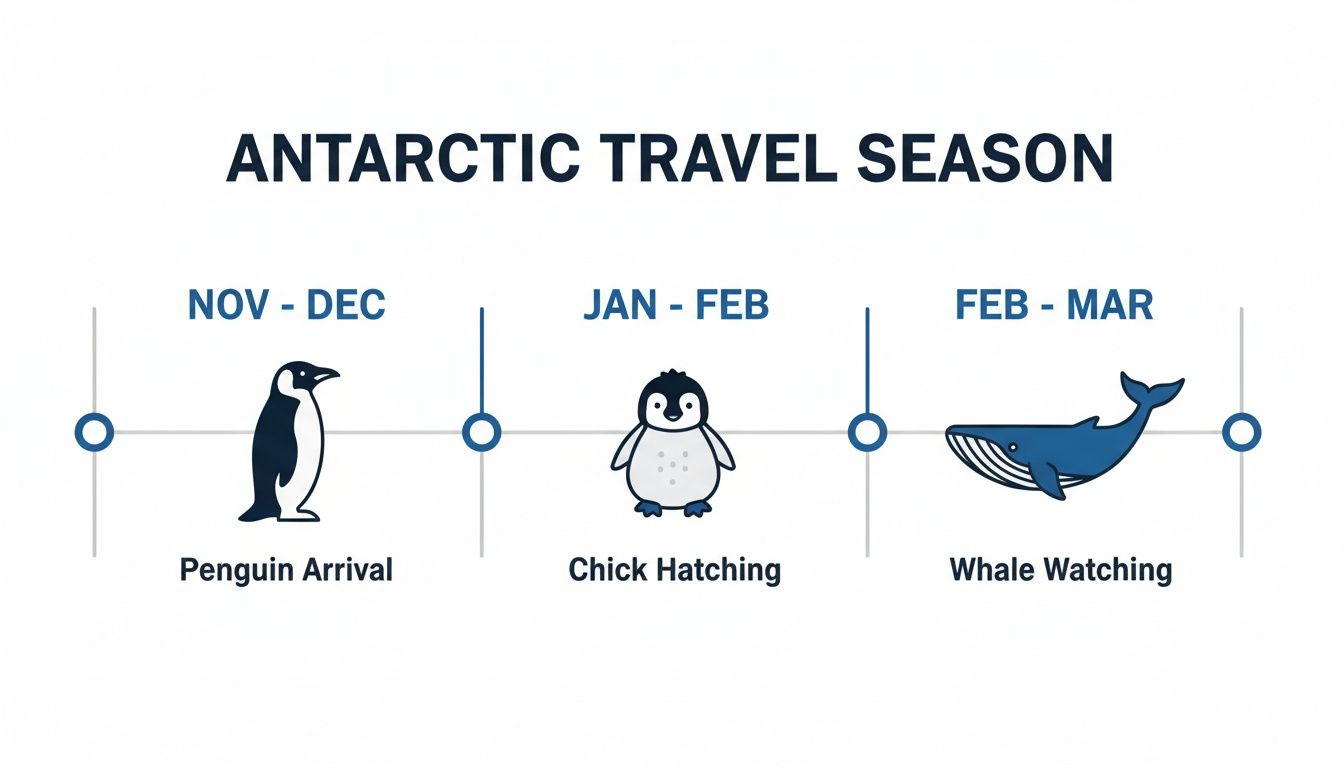
As you can see, there’s a clear progression, from colonies being established in the early summer to the peak of whale activity as the season begins to wind down.
High-Level Seasonal Overview
An Antarctic expedition is a major undertaking, whether it’s a ten-day cruise or a sixty-day ski crossing. The decision of when to go influences every single detail, from your kit list to the mental preparation required. For deep-field expeditions, this choice isn’t just about preference—it’s critical for safety.
- Early Summer (November–December): This is a world of pristine, ice-choked channels. It’s a time of awakening, as penguins return to establish their colonies and begin courtship rituals. The ice is formidable and the conditions are colder, demanding serious preparation.
- Mid-Summer (January–February): This is the warmest part of the year, with near-constant daylight. It’s the peak of activity. Penguin chicks are hatching, and the continent is buzzing with new life. This window is often the most popular for its accessibility and more stable weather.
- Late Summer (February–March): As the season draws to a close, whale sightings become the main attraction. As the light starts to fade, the sunsets become more and more dramatic. It’s a quieter, more reflective time to be on the Peninsula.
Antarctic Season at a Glance
This table breaks down the core visitor months, giving a quick summary of what to expect from the weather, wildlife, and overall experience.
| Month | Average Peninsula Temp (°C) | Daylight Hours | Primary Wildlife Activity | Ideal For |
|---|---|---|---|---|
| November | -5°C to +2°C | 20-22 | Penguin courtship, pristine ice, seal pups | Photographers, pristine landscapes, fewer ships |
| December | -2°C to +4°C | 22-24 | Penguin nesting and egg-laying, first chicks may appear | Classic Antarctic experience, peak daylight |
| January | 0°C to +5°C | 20-22 | Penguin chicks hatching, seal pups, high wildlife density | Peak season, family trips, maximum wildlife activity |
| February | -1°C to +4°C | 16-18 | Fledgling penguin chicks, increased whale sightings | Whale watching, stunning sunsets, more accessible areas |
| March | -5°C to 0°C | 12-14 | Peak whale season (humpbacks, minkes, orcas), sunsets | Dedicated whale watchers, quieter travel, dramatic light |
It's a dynamic environment where every month brings a new character to the landscape and its inhabitants.
For something truly serious, like a full ski traverse to the South Pole ( 90° S ), the operational window shrinks dramatically. Success hinges on hitting the most stable weather possible, typically between November and January. This is the only way to guarantee the 8–10 hours of daily progress needed to make it.
You can get a better sense of what goes into these bigger journeys by reading our guide on expedition planning, logistics, and lessons.
The Awakening Season: October to November
The operational window for Antarctica cracks open in late October and November. This is the continent waking up from its long, dark winter, and being there to witness it is a profound experience. The landscape is defined by vast, pristine ice and a sense of raw, untouched wilderness.
It’s a time of immense transition. On the Peninsula, temperatures will hover somewhere between -10°C and 0°C , which demands a disciplined approach to your kit and how you manage yourself. The sea ice that has locked down the coastline for months finally starts to fracture and break apart, opening up access for vessels to get into places that were unreachable just weeks before. This whole process is dynamic and unpredictable, which is why an experienced crew and a flexible itinerary are non-negotiable.
A Landscape of Ice and Courtship
The single defining feature of the early season is ice. Everywhere. The landscapes are smothered in a thick, fresh blanket of snow, unspoilt by the traffic that will arrive later in the season. The icebergs, freshly calved from the winter ice shelves, are at their most enormous and sculptural. It makes for a formidable and beautiful environment to navigate.
For the wildlife, this is the time of arrival and preparation. The continent’s sprawling penguin colonies begin to reform as the birds return from their winter at sea.
- Penguin Highways: You’ll witness thousands of Adélie, gentoo, and chinstrap penguins waddling ashore, busy re-establishing their ‘penguin highways’ from the sea up to their nesting grounds.
- Courtship Rituals: This is the peak of the courtship season. Males are meticulously selecting the perfect stone to present to a potential mate—an elaborate and often comical ritual that solidifies their bond for the breeding season ahead.
- Seals on the Floes: Weddell and crabeater seals are a common sight, hauled out on the abundant ice floes to rest after the harshness of the long winter.
From a logistical standpoint, the early season offers a unique perspective. Fewer vessels are around, which gives a more isolated and contemplative experience. The challenge of navigating the lingering sea ice is significant, but the reward is seeing Antarctica in its most pristine, untrodden state.
Operational Considerations for Early Season Travel
For any expeditioner, this period demands robust preparation. The conditions are colder and the ice is far less predictable. There is no room for complacency. Your layering system isn't about comfort; it's about operational effectiveness. This is where meticulous kit selection—like choosing the right Fjällräven base layers and outer shells—becomes critical for managing moisture and your core temperature.
The same goes for equipment. It has to be proven and reliable. A stove that decides not to work at -10°C isn't an inconvenience; it's a serious, trip-altering problem. Our training programmes hammer these fundamentals home because, in these environments, small details have massive consequences.
This early window is often a favourite for photographers and anyone seeking a bit of solitude. The quality of light is exceptional, with long sunrises and sunsets painting the vast ice formations in soft, dramatic colours. The challenges are real, but for those who are properly prepared, the rewards are immense. The journey typically kicks off in South America, and getting your head around the logistics of this starting point is a key part of the process. You can get prepared by reading our guide to Punta Arenas, the gateway to Antarctica, which breaks down how to manage this critical phase of your expedition.
High Summer: Peak Wildlife and Access
December and January are the pinnacle of the Antarctic summer. This is when the continent opens its doors, the weather finds its most stable footing, and the entire ecosystem kicks into overdrive. For anyone planning a journey, this is prime time, but understanding what it means on the ground is key.
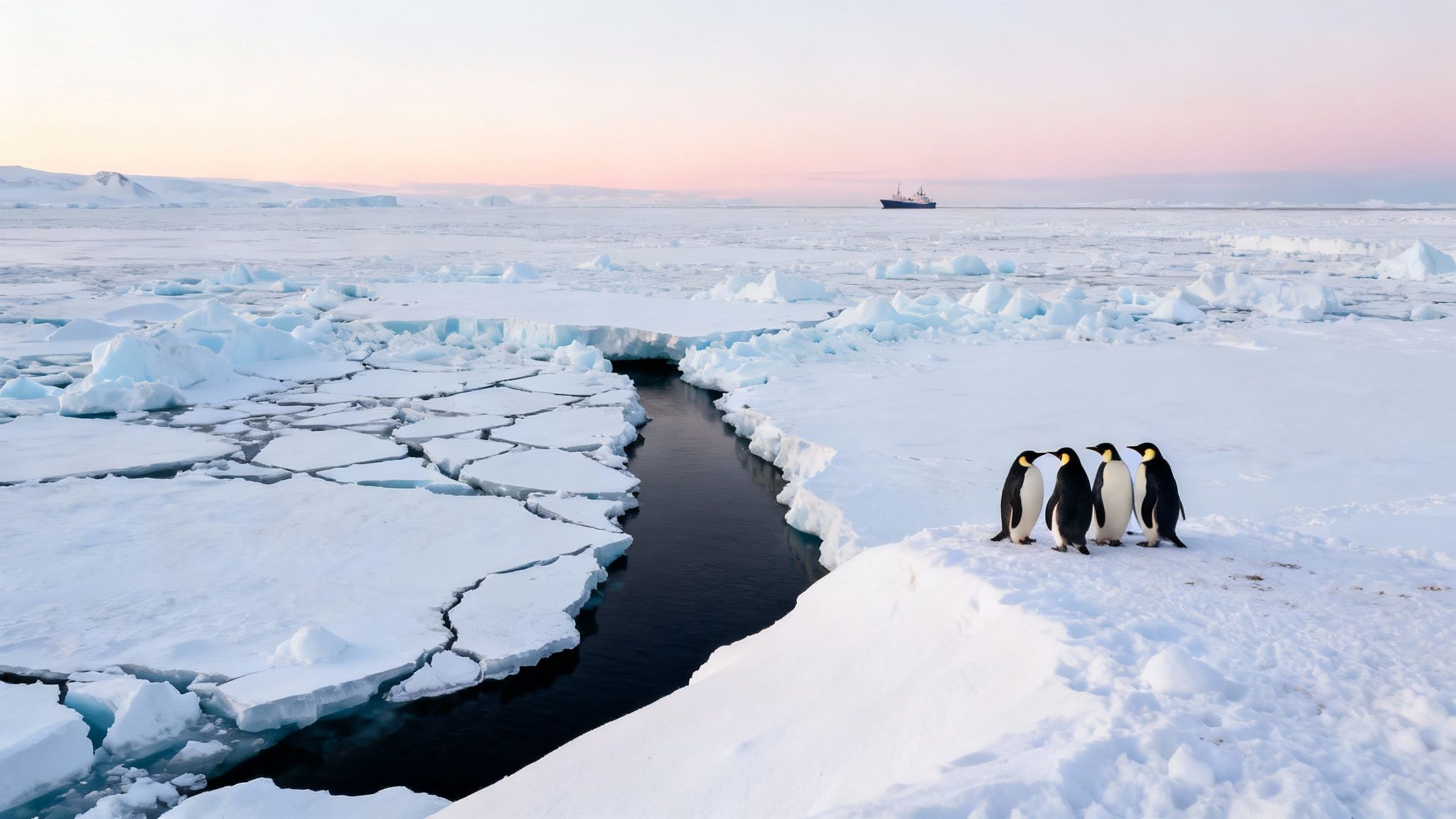
On the Peninsula, temperatures often hover above freezing, typically settling between 0°C and 5°C (32°F to 41°F) . But do not let that fool you. Conditions can turn in a heartbeat. A calm, sunny day can give way to a vicious katabatic wind with almost no warning—a sharp reminder that we are only ever guests here.
The Power of the Midnight Sun
The most defining feature of high summer is the light. Or rather, the lack of darkness. We get almost 24 hours of daylight , a phenomenon that completely changes the game for both wildlife and expeditions. The sun circles the horizon, never really setting, creating a surreal and energising atmosphere that you have to experience to understand.
This relentless daylight is the single most critical factor for our long-duration activities, especially the South Pole expeditions. It’s non-negotiable. The ability to ski for 8-10 hours a day, covering 15-20 kilometres whilst hauling a pulk that can weigh up to 50kg , is only possible because of this extended operational window. It allows for a steady, sustainable routine, which is everything on the polar plateau where temperatures remain at a brutal -25°C to -35°C .
The endless daylight does more than just give you more hours; it interferes with your perception of time. A disciplined routine, dictated by your watch and not the sun, becomes the only way to manage energy and stay focused over a multi-week expedition.
A Continent Bursting with Life
High summer is when the wildlife spectacle hits its peak, all fuelled by an explosion of krill in the Southern Ocean. The entire food chain is buzzing, and the experience is an assault on the senses. The noise, the smell, the sheer number of animals—it’s overwhelming in the best possible way.
- Penguin Rookeries: The colonies are chaos. By January, most chicks have hatched, and the air is filled with the constant sound of fluffy, hungry chicks chasing their parents for food.
- Seals and Pups: You’ll see Weddell, crabeater, and leopard seals hauled out on ice floes and beaches everywhere. Pups born earlier in the season are still around, growing impossibly fast on their mothers’ rich milk.
- Avian Activity: Skuas and other seabirds are constantly circling the edges of the colonies. It’s a raw, dramatic reminder of the predator-prey dynamics that rule this place.
This unique combination of daylight and milder weather makes December and January the undisputed best time for both ship-based landings and deep-field ski expeditions. If your objective is to see Antarctica at its most vibrant and accessible, this is your window.
The Realities of Peak Season
That accessibility comes with a catch: it's the busiest time of year. The Antarctic Peninsula, in particular, becomes the centre of the action. In fact, the Peninsula attracts a staggering 98% of all visitors to the continent. During the 2023-24 season, the International Association of Antarctica Tour Operators (IAATO) reported that 35 expedition vessels carried over 44,000 passengers into this region. You can discover more insights about these tourism numbers and what they mean.
This concentration of people requires military-grade planning and an unwavering commitment to responsible travel. Every credible operator sticks rigidly to IAATO guidelines, which dictate everything from landing site schedules to how close you can get to wildlife. The objective is to coordinate every move to minimise our collective footprint, ensuring sites aren't swamped and animals aren't disturbed.
For us at Pole to Pole, this isn’t just about following rules. It’s part of our DNA. We don’t fight nature—we live within it, and that starts with absolute respect.
Late Summer: Whales and Fading Light
As the peak of summer fades into February and March, the entire feel of an Antarctic trip changes. The relentless 24-hour daylight finally starts to pull back, and its retreat brings a completely different atmosphere. This is a quieter, more reflective time of year, defined by incredible wildlife sightings and some of the most beautiful light of the entire season.
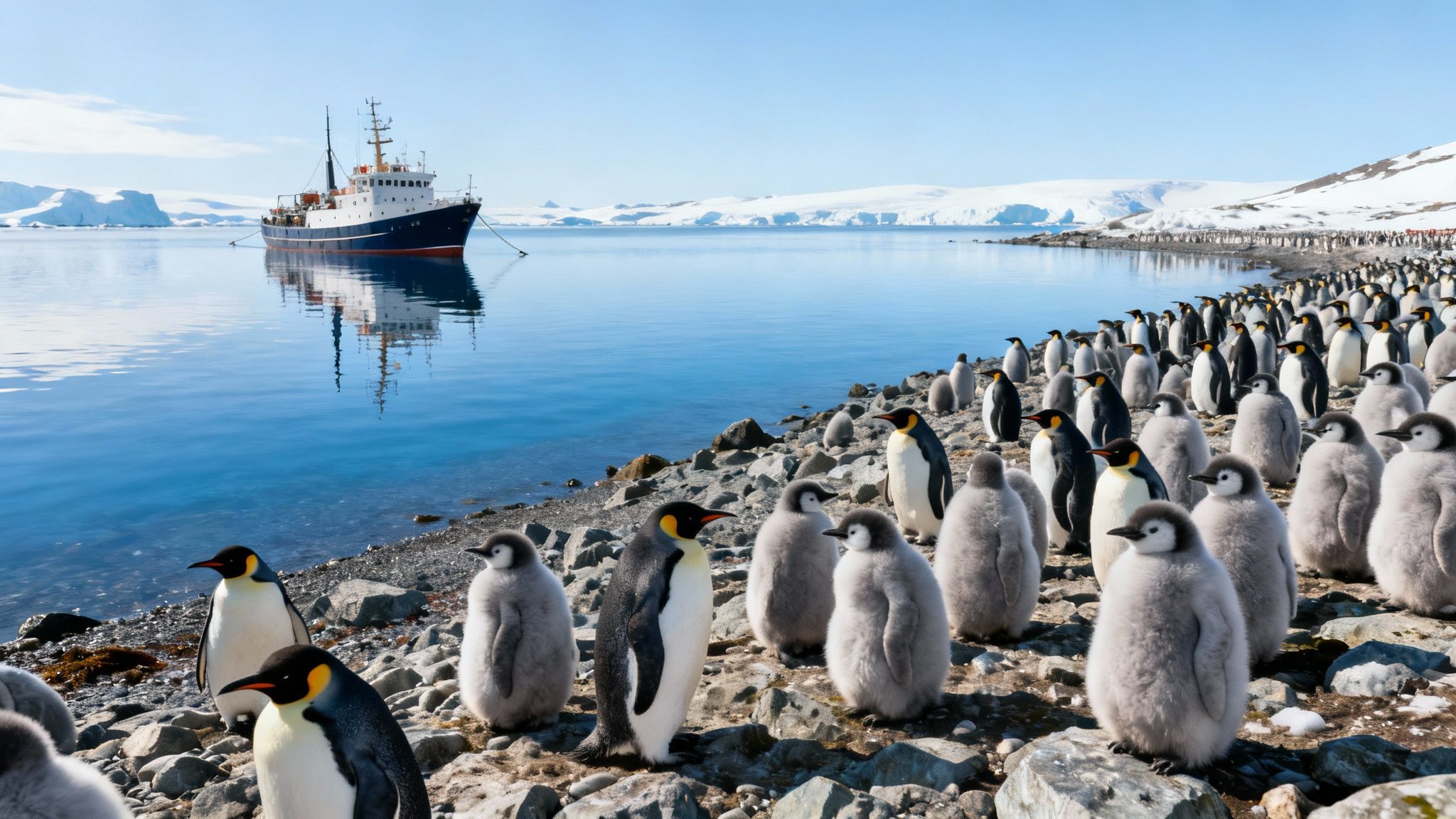
The sun, now dipping below the horizon for longer each day, paints the sky and ice with colours that photographers live for. Long, golden evenings soften the stark whites and blues of the landscape. You can feel the temperature starting to drop as the nights grow longer – a clear sign that the short Antarctic summer is nearing its end.
A Spectacle of Marine Giants
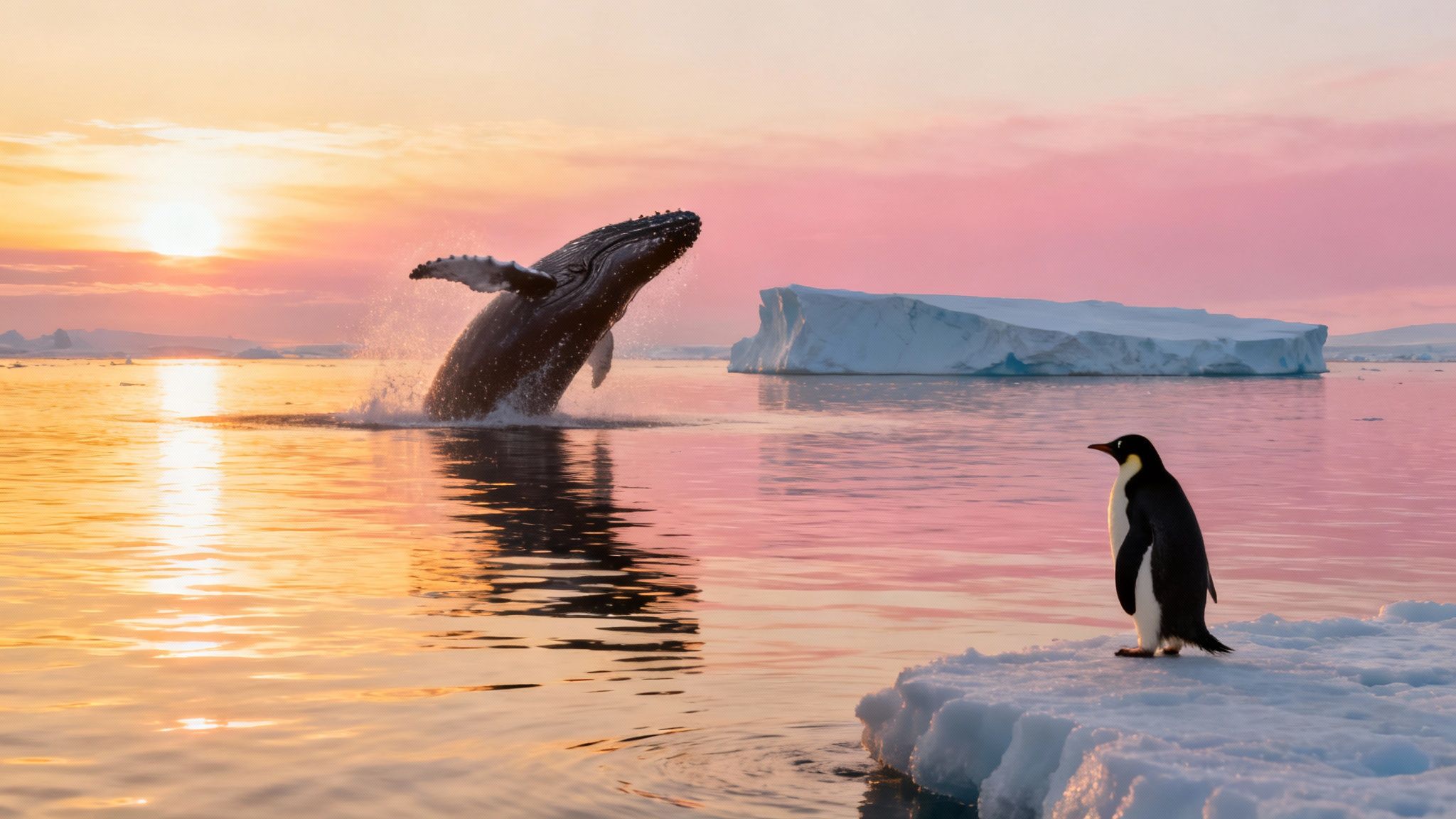
The single biggest draw of the late summer is the sheer number of whales. The Peninsula's waters are still rich with krill, attracting huge gatherings of marine mammals getting their final fill before the long migration north. If whale watching is high on your list, this is without a doubt the best time to be here.
- Humpback Whales: Sightings become almost a certainty. It is not uncommon to see groups bubble-net feeding, a complex and mesmerising hunting strategy best witnessed from a Zodiac.
- Minke Whales: These smaller, stealthier whales also appear frequently, often popping up unexpectedly close to the ship.
- Orca: Pods of orca can be spotted patrolling the channels, their power and intelligence on full display as they hunt for seals amongst the ice floes.
This is also a turning point for the penguin colonies. The tiny chicks are now almost fully grown, having swapped their fluffy down for sleek, waterproof feathers. The rookeries are still a hive of activity, but the energy has shifted. It’s all about fledging now, as the juveniles take their first swims and learn to survive on their own.
The Closing Operational Window
For anyone running an expedition, this period is a closing window. The dropping temperatures mean sea ice starts to creep back, especially in the more southerly bays. A route that was simple in January can become difficult or impassable by March, demanding real experience and flexibility from the entire team.
This is where the principles we hammer home at the Pole to Pole Academy become non-negotiable. An itinerary is a plan, not a promise. The ability to read the ice, weigh the risks, and make the right call under pressure is what makes an operation safe and successful. The reward for this late-season mindset is fewer ships and a real sense of solitude.
This quieter period is a stark contrast to a broader trend. Once the preserve of a handful of explorers, Antarctica has seen explosive growth in visitor numbers. From just 5,000 annual visitors in the early 1990s, the number shot up to over 122,000 in the 2023-24 season. Discover more insights about tourism's future in Antarctica.
This growth highlights why the managed, respectful approach often found late in the season is so important. It’s a time for those who truly appreciate the subtle power of the continent as it prepares for the long, dark winter – a final, magnificent show before the light disappears.
Matching Your Objective to the Season
The idea of a single "best time to visit Antarctica" is a myth. The right time is mission-specific. Your objective dictates the operational window, the gear you’ll need, and the entire character of the experience.
A photographic voyage hunting for wildlife is a world away from a full 'Last Degree' ski expedition to the Geographic South Pole ( 90° S ). Success for either one hinges on timing it right. This isn’t a new concept; Roald Amundsen’s historic success was built on meticulous planning and timing, a lesson just as critical today as it was in 1911.
For Peninsula Voyages and Wildlife Observation
If your objective is a classic Antarctic Peninsula voyage—think dramatic landscapes and incredible wildlife—then high summer in January is your sweet spot. It offers the most reliable balance of everything you’re looking for.
During this peak period, you’ll find:
- Optimal Weather: Temperatures are at their warmest, often hovering around freezing, and the weather is generally more settled. This means more opportunities for shore landings and Zodiac cruises.
- Peak Wildlife Activity: Penguin colonies are buzzing with activity as chicks hatch. The 24-hour daylight triggers a krill boom, drawing in seals and whales.
- Maximum Accessibility: The sea ice is at its minimum, opening up channels and bays that are completely locked in for the rest of the year.
This is why it's the busiest time. Since organised tourism kicked off with the MS Explorer back in 1969, visitor numbers have climbed steadily. Between 2014 and 2023, tourism increased by over 50% in just five years, with most people choosing this high summer window. You can read the full research about these tourism trends.
For Mountaineering and Climbing
For those with bigger ambitions, like climbing Mount Vinson ( 4,892 metres ), the timing is far less flexible. The mid-summer window of December and January is essentially non-negotiable.
This period brings the most stable high-pressure weather systems over the continent’s interior, which is absolutely critical for safety at altitude. Constant daylight is also essential for managing long summit days and giving you the flexibility to wait out bad weather. Trying a climb like this outside of that window introduces an unacceptable level of risk from extreme cold and violent storms.
For South Pole Ski Expeditions
A serious undertaking like a 'Last Degree' ski expedition to the South Pole operates on an even tighter schedule. The window is incredibly narrow, typically running from early November to mid-January .
This isn't a matter of preference; it's a logistical necessity driven by a few hard realities:
- Stable Plateau Weather: This period gives you the best odds of encountering the cold but relatively stable conditions needed to make consistent progress across the polar plateau.
- Sufficient Time: Skiing over 111 kilometres to the pole takes time. Starting early ensures you have a buffer to cover the distance, all whilst hauling a pulk weighing 45-50kg , before the season closes and the support flights stop.
- Daylight for Progress: The 24-hour daylight is vital. You’ll be skiing for 8-10 hours a day, and you need every minute of it to stay on schedule.
The decision of when to launch a polar expedition is not a matter of preference; it is a calculated decision based on probability and risk management. Pushing the window is a gamble against the continent itself—a gamble that seasoned explorers like Børge Ousland or Felicity Aston rarely take.
Our training programmes are designed to prepare you for the exact conditions you’ll face. A course at our Academy at 64° 25' 24" N in Sweden or Svalbard isn’t a generic boot camp; it’s a dress rehearsal. We replicate the temperatures, routines, and challenges of a high-summer polar expedition, so when you arrive in Antarctica, your skills and mindset are already dialled in.
Understanding the demands of this environment is the first step. You can get a better sense of the preparation involved by exploring how much kit it takes to face the coldest place on Earth.
Your Antarctic Timing Questions Answered
We receive a lot of questions from people planning an Antarctic journey. Here are some direct, experience-based answers to the queries that land in our inbox most often.
When Is the Cheapest Time to Go to Antarctica?
For standard tourist voyages along the Peninsula, the shoulder months—late October, November, and March—tend to have lower prices. Operators are trying to fill berths at the very start and end of the season, when conditions can be more of a gamble.
However, that logic goes straight out of the window for serious deep-field expeditions. For an undertaking like a South Pole ski, there is no "cheap" time. The operational costs for logistics, safety, and expert guidance are immense, fixed, and tied to a logistical window that simply does not move.
Trying to cut corners on timing for this kind of objective is a false economy. It directly compromises safety and your chances of success. Our focus is always on maximising value through world-class training and meticulous planning, not on shaving a few quid off the departure date.
How Far in Advance Should I Book My Antarctic Trip?
The answer depends entirely on what you’re trying to achieve. The booking timeline is less about securing a spot on a plane and more about committing to the necessary preparation.
- For ship-based Peninsula voyages: Booking 12 to 18 months in advance is standard practice. It is generally a good idea to lock in your preferred dates and cabin type.
- For a Pole to Pole challenge (e.g., South Pole Last Degree): We strongly recommend you start the conversation with us at least 18 to 24 months before you want to go.
This extended timeframe has nothing to do with ticket availability. It’s about giving you enough runway to properly engage with our comprehensive physical and mental preparation programme. Competence and confidence must be built long before you ever set foot on the ice.
What Is the Weather Really Like in the Antarctic Summer?
In a word: unpredictable. Antarctica's weather can turn on a sixpence, and there are massive differences between the relatively balmy Peninsula and the continent's interior.
On the Antarctic Peninsula, a 'warm' day in January might hit 5°C (41°F) . In the sun with no wind, it can feel genuinely pleasant. But a sudden katabatic wind—a river of dense, cold air flowing down from the polar plateau—can plunge the wind chill well below freezing in minutes.
On the polar plateau, where our South Pole expeditions operate, 'summer' is a very relative term. You should expect ambient air temperatures of -25°C to -35°C (-13°F to -31°F) . And that’s before wind chill, which will make it feel significantly colder. This is precisely why our training programmes obsess over layering systems, moisture management, and tent routines. There is zero margin for error.
Antarctica is a continent of extremes, but it's the variability that catches people out. The difference between a comfortable day and a dangerous one can be a matter of minutes. This is why we train for the worst conditions, not the best.
Can I See the Aurora Australis During My Trip?
It's highly unlikely. The Aurora Australis, or Southern Lights, needs two key ingredients: solar activity and, crucially, darkness.
The main Antarctic travel season from November to February coincides with near-constant, 24-hour daylight, especially at the high latitudes where expeditions take place. Without a dark sky, the aurora is simply invisible to the naked eye.
To have any real chance of seeing it, you’d need to be in Antarctica during the winter (April to September). This is a period of profound cold and perpetual darkness—a vastly different and more hazardous undertaking reserved almost exclusively for scientists at permanent research stations.
For those curious about travel timing in other parts of the world, a broader platform can offer some insights. You might find some useful general travel timing tools to help plan future adventures. But when it comes to Antarctica, the best time to visit is all about aligning the continent’s brutal seasons with your personal expedition objectives.
At Pole to Pole , we don't just take you to the world's most remote places; we prepare you for them. Our training academy and expeditions are built on decades of real-world experience. If you are ready to explore your possible, discover our challenges today.